
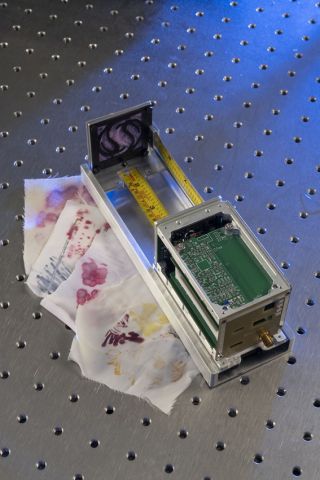
When the multi-layered, multi-coloured fabrics – developed by researchers at the University of Glasgow and the ASCUS – Art and Science Lab in Edinburgh, both in the UK – are exposed to certain wavelengths of radiation, including ultraviolet (UV) radiation, the dyes in each layer fade, revealing the layer below. This creates visible evidence of the levels of radiation they have absorbed.
In February 2026, the team plans to send a sample of the fabric into orbit around the Earth aboard a small satellite called a PocketQube to test the performance of the pigments in space.
The researchers believe that the fabrics could be used to make clothing for astronauts and to cover sensitive equipment, so that it can be determined at a glance if they have been exposed to dangerous levels of radiation. The fabrics could also be used in clinical settings for the production of radiation-sensitive scrubs and aprons, and to create colour-changing clothes that help people monitor their exposure to sunlight, helping to reduce the risks of skin cancer.
A Lecturer in space technology at the University of Glasgow’s James Watt School of Engineering, Gilles Bailet, is leading the project, which is called Pigmented Space Pioneers. He says: "Exposure to radiation breaks-up the pigments in the bacteria, while similar exposure to radiation in humans breaks our [deoxyribonucleic acid] DNA. For the bacteria, that means a reduction in their colour saturation, but for us it means greater risk of genetic mutations and cancers. We are aiming to harness the bacteria’s highly visible response to create an unmistakable early-warning system for radiation exposure. It does not need electronics or batteries to work – all you need are your eyes to see the colours respond to changes in ambient radiation.”
The team has developed fabrics using numerous different bacteria-derived colours: red, yellow, pink, blue and orange. The harmless bacteria naturally produce different pigments for various protective purposes, in the same way as some bacteria defend against UV radiation, antibiotics and other environmental threats.
The bacteria are grown by the lead biologist at ASCUS, Keira Tucker, and are applied to stacks of fabric in precise patterns and layers by the University of Glasgow’s Professor Massimo Vassalli and Dr Vineetha Jayawarna using specialised needles and three-dimensional (3D) printing techniques.
Once the bacteria die, they leave behind only their protective pigments, creating a stable, colourfast fabric that responds predictably to radiation exposure.
Fashion designer Katie Tubbing is behind the design of the fabric. She says: “What we are developing is a fabric with a design that is visually interesting, but is also easily readable, so that in the future it will be easy to see at a glance when the dye has faded in response to potentially dangerous radiation exposure. It is an exciting challenge, and it is a unique fusion of art and science.”
Tucker adds: “At ASCUS, we are working on ways to use common forms of bacteria to create more sustainable ways of dyeing clothes [rather] than relying on synthetic dyes, which can contaminate water supplies and have serious negative impacts on the environment. In this project, one of the pigmented bacteria we are using is Serratia marcensens; you might have in your bathroom if you have not cleaned your sink in a while, it forms red rings around taps. It is great to think that we can put these bacteria to new use in ambitious projects like Pigmented Space Pioneers.”
The team is working with Edinburgh-based space start-up Spinning Around to send the first piece of fabric into space in February 2026. The Founder and Chief Executive Officer (CEO) of Spinning Around, Alastair Broom, says: "Our PocketQube satellite, SpinnyONE, will return photographs of the fabric during [the February 2026] mission and show the change in colour to the pigments as the satellite is exposed to months of radiation in low Earth orbit.”
If the mission in February 2026 goes as planned, the team hopes to launch a more ambitious project that would take a larger piece of fabric to the surface of the Moon in early 2028. The patch would be equipped with a camera and a microscope to enable the team to broaden its understanding of how the dye reacts to long-term exposure to the moon’s harsh radiation environment. The data they collect about radiation-exposure patterns could help support safety measures for future manned missions to the moon.